How to Avoid the AI Hiring Hangover
If you’ve ever heard Brené Brown talk about a "vulnerability hangover," you know the feeling. It’s that moment after you’ve shared a little too much, when you replay everything in your head and think, Did I really say that?
In hiring, there’s a version of that too.
You made a hire you felt good about. The resume looked strong, the experience lined up, and AI summaries reinforced the decision. And then, a few weeks in, something feels off. They’re struggling in situations that should be straightforward, communication isn’t landing, and the role isn’t being handled the way you expected.
You start thinking: How did we miss this?
That moment is the hiring hangover.
Where It Starts
We hear the same story often. A candidate looks perfect on paper. The resume checks every box, and AI highlights the right skills, experience, and keywords. But once they’re in the role, it doesn’t translate.
As one hiring manager put it:
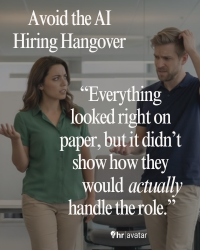
"Everything looked right on paper, but it didn’t show how they would actually handle the role."
That’s the gap. AI evaluates what candidates say, but hiring success depends on what candidates can actually do.
Why AI Alone Can Lead to a Hiring Hangover
AI is incredibly helpful for speeding up the process and organizing information, but it’s still working from resumes, job descriptions, and prompts. Naturally, it favors candidates who present well on paper.
We’ve all seen how that plays out. Every admin candidate is "detail-oriented," and every customer service candidate has "strong communication skills." But when people are put in real situations, the differences show up fast. Some thrive, some get overwhelmed, and some miss details that matter.
That’s where hiring hangovers come from.
How to Avoid It
The shift we’re seeing is simple: don’t rely on AI alone. Pair it with structured assessments.
Instead of guessing, you can actually see how someone communicates, how they handle pressure, and how they solve real problems. As one customer said:
"AI tells me what they’ve done. Assessments show me what they can handle."
This is where everything comes together. By combining assessment scores with a candidate’s resume, you start to get the whole picture. If you really want to supercharge your hiring, you can take it a step further by bringing in job descriptions, company culture, and deeper assessment data, including skills, behavior, competencies, and more. Then, AI can help compare everything side by side.
This creates a clearer view of how a candidate aligns with the role, where strengths and gaps exist, and what to explore further in interviews. It’s not just faster, it’s more informed.
The goal isn’t just to move quickly. It’s to make better hiring decisions with a more complete view of each candidate.
The Bottom Line
AI isn’t the problem. Relying on it alone is.
AI is powerful, but it’s only part of the picture. Resumes and summaries can only tell you so much. If you want to avoid the hiring hangover, you need to see how candidates actually perform before you hire them.
Because the real risk isn’t just making a bad hire. It’s realizing too late that you never had the full picture.
And that’s a hiring hangover most teams would rather avoid.
